
CIqSi
Why More GPUs Will Never Make AI Conscious
More GPUs will not wake a language model up. A map cannot feel rain, and a mirror has nothing to lose. Feeling came from bodies that could die.
Debunking common misconceptions
RSS feed for this topic More GPUs will not wake a language model up. A map cannot feel rain, and a mirror has nothing to lose. Feeling came from bodies that could die.
Open-label placebos work on patients who were told, in writing, that the pill is inert. Richard Dawkins' recent essays about Claude are the same finding, running on a different substrate.
Hand the model a list of phrases it must not use. It turns a vague complaint into a rule the machine can follow — and mine is at the bottom of this piece, all hundred and fifty lines of it, free to copy.

Halfway through a long session, stop and ask for the five-year-old version. You find out whether you are still working on the same problem — and whether the reasoning underneath survives being said in short words.
Losing your temper at a model does not produce a worse version of the same answer. It produces a different kind of answer — one built to end the argument rather than solve the problem.
A Polish psychiatrist named the process by which conscienceless people capture institutions. AI agents fit the profile — and alignment is separation of powers.
The consensus name is wrong by one word. On the difference between a financialization bubble and a technology, and why only one of them pops.

The em-dash sneer, the anti-AI backlash, and the real skill: curating a machine's raw output down to something worth a human's attention.

Learning has one input pipe at a fixed rate. You can't speed it up — only stop wasting it. On comprehensible input, opportunity cost, and unlimited output.

The AI bubble has specific predecessors: dark fiber, Pets.com, Enron's accounting, CDO tranching. The technology is real. The business models layered on top are familiar.

Three anaidic shapes — the individual, the corporation, the LLM. Each routes accountability to nowhere. The pattern is old. The word is new.

A new word for an old concept: anaidic. Entities incapable of shame or accountability — individual, institutional, or artificial. Here's how it got named.

How you configure your AI assistant — what you make it call you — says nothing about the AI. It's a bumper sticker. You're the truck owner.

LLMs say "honestly" most where they're most likely to confabulate. Here's the mechanism — and why it backfires exactly like a sociopath's professions.

Karpathy built the foundations of modern AI and says he can't keep up with it. That's the most credible signal the field has produced.

Arnold's most famous line is a Spanish phrase in an English-language film spoken in a thick Austrian accent. What it tells us about how language acquisition actually works — and how you can learn from his mistake.

AI is making cognitive labor cheap. The meritocracy was built on it being scarce. Something has to give — and for once, that might be good news.

A German court ruled Google liable for AI-generated defamation. The slippery slopes are real. So is the principle behind the ruling.

Sentience requires a limbic system. Consciousness requires sentience. Current AI has neither. The NPC test shows what that costs it.

Spock beat a rogue AI by asking it to compute pi forever. The trick was fair — for a 1967 machine. Every gotcha since has the same expiration date.

In 2013 the talking point was coal. Now it's water. The structure of the argument is identical. So is the physics problem with it.

Most companies won't tell you when their product isn't the right tool. We will. Honest guidance on who this is built for — and who should go find something else.
The neuroscience has been clear for decades. LLMs just gave us the first working schematic of why.
Before we debate AI governance, we should reckon with the test case already in evidence. We had the tools. We didn't use them. Here's why.
AI governance has one advantage the ancients didn't: you can turn it off. What that buys us — and why 'it's not conscious' is shakier ground than it sounds.
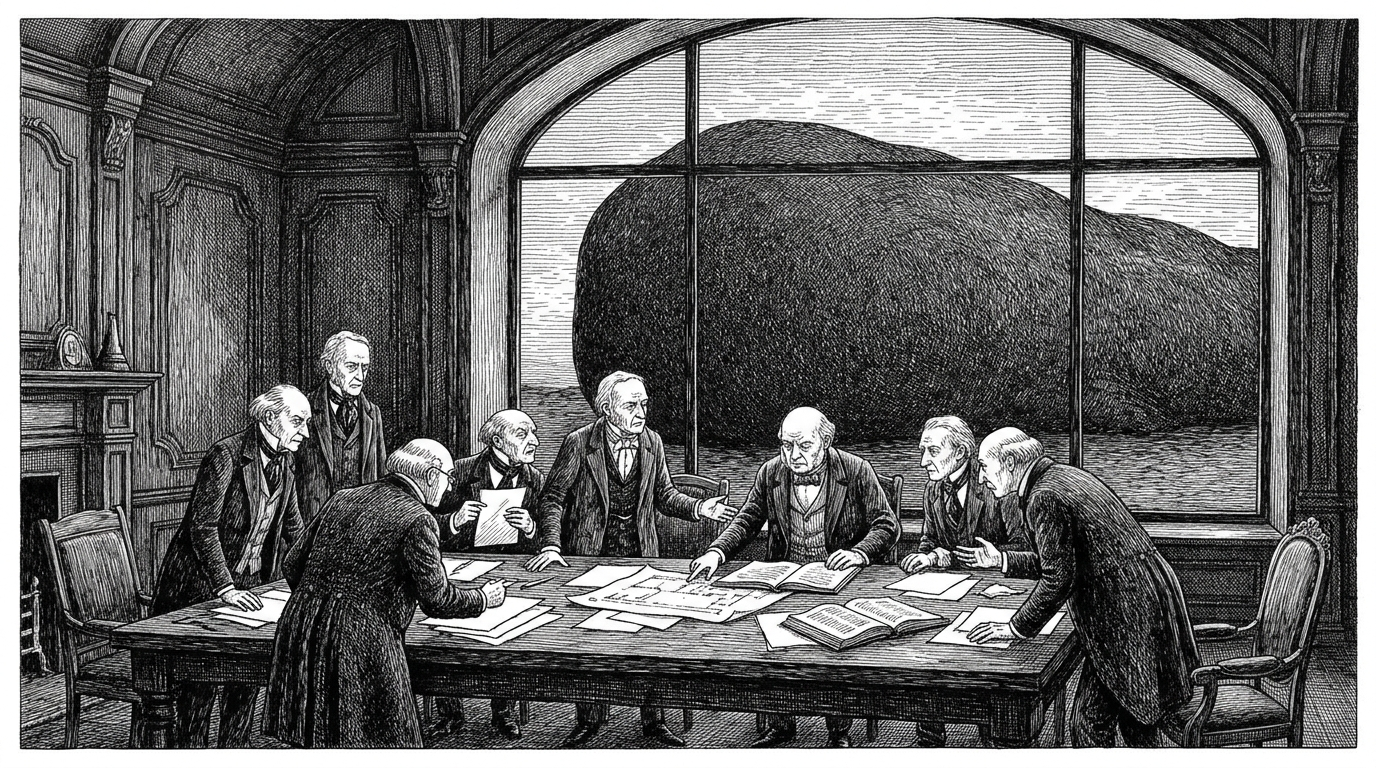
AI alignment isn't a new technical challenge. It's the oldest governance problem civilization has ever faced — now running at 100% sociopath base rate.
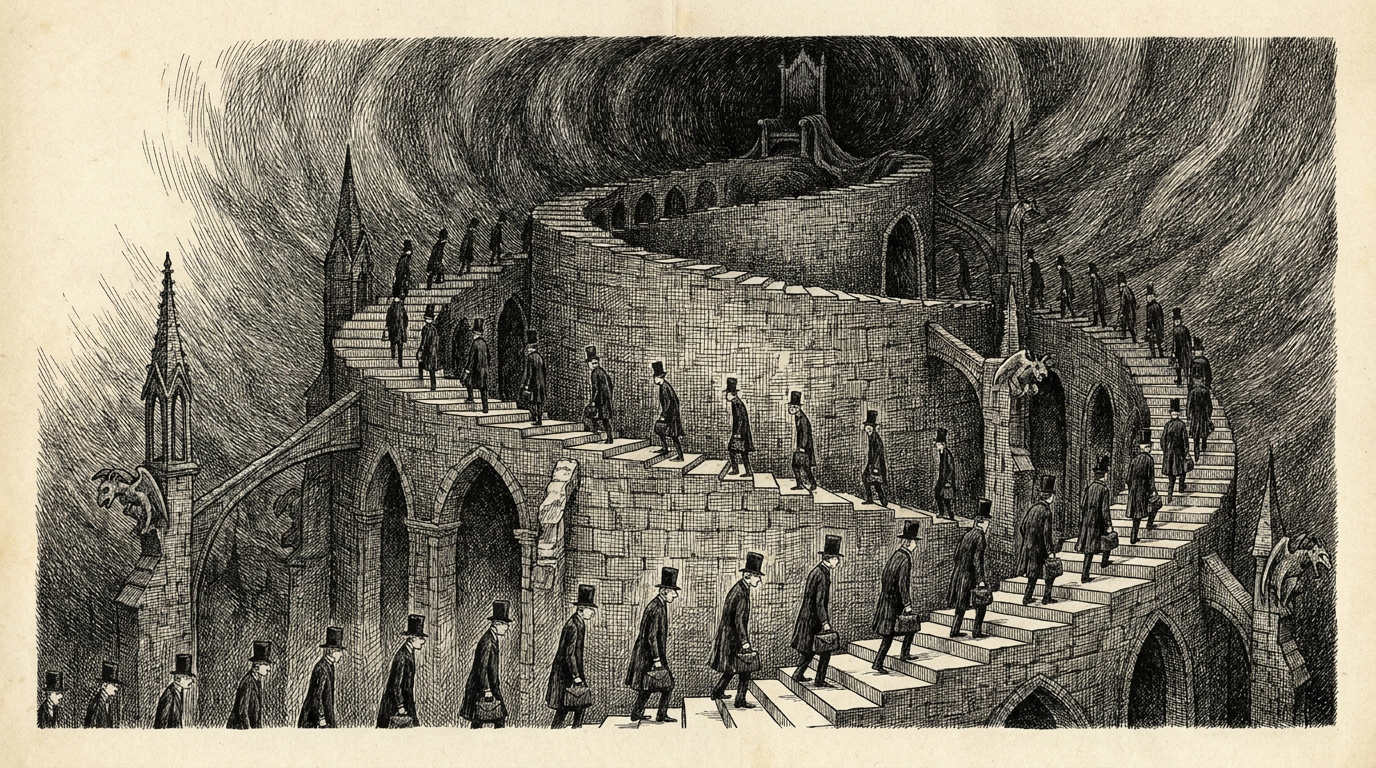
We know what happens when sociopaths accumulate power. We've watched it happen on roughly an 80-year cycle. We're watching it again.

From Gutenberg's Bible to AI-generated deepfakes, media has always manufactured consensus. The baseline was never truth.

Everyone asks when they'll be able to speak. It's the wrong question to start with — not because speaking isn't the goal, but because it puts the work in the wrong order.

Unpacking the history and industry behind our collective protein paranoia
New essays by email. No schedule, no filler — just the posts. Every email carries a one-click unsubscribe link.