How LinguaMama Got Built, Part 7: Administrative Silence
The Spanish DNV can be filed from inside Spain, lasts three years, and has a default approval mechanism. We were fifteen kilometers from the border.
By Geordie Everitt
The first thing we did after turning around on the A2 was drive back to Tavira. The second thing was start researching Spain.
This was not as obvious a pivot as it sounds. The Portuguese D7 had been the plan for a year. We had infrastructure in it — the attorney, the fixer, the documented paper trail, the flat we were still paying for. Spain was adjacent, geographically and culturally, but it was a different country with a different immigration system, and we had approximately eight weeks of Schengen time remaining before the authorities would stop caring about the distinction.
The Spanish equivalent of the D7 is the Non-Lucrative Visa. We looked at it first, because it was the obvious parallel.
The NLV Problem
The NLV is what it says: a visa for people who can demonstrate sufficient income to live in Spain without needing to work there. It requires private health insurance, income thresholds, the usual documentation. Like the D7, you apply from your home country, the consulate reviews it, your passport comes back with or without a sticker.
The problem, which surfaced in research rather than from personal experience of the D7 variety, was the dependency structure. Maria would be the primary applicant — her pension, her documented income, the basis of the application. I would be her dependent. In Portugal, that had been a workable arrangement. In Spain, a dependent on an NLV is subject to the full restrictions of the NLV: no lucrative activity. Not "reduced lucrative activity." Not "lucrative activity with disclosure." None.
This was not workable. Not for a person actively building a language-learning platform and charging actual money for it.
We kept looking.
The DNV
The Digital Nomad Visa operates under Spain's Ley de Startups — the 2023 legislation designed to attract remote workers, digital entrepreneurs, and the broader category of people who earn their living from a laptop and have no particular reason to do it in a specific country. I was, precisely, this person.
Three years, renewable for two more. After five years, permanent residency — not citizenship, but no restrictions and no dependency complications. Health insurance is recommended; it is not mandated. We would get it. In Spain, private health coverage costs approximately what a restaurant meal costs in the United States, which is to say it costs what things cost in a country that has decided health is not a revenue opportunity.
The detail that changed everything: you can apply for the DNV from inside Spain. Not from a Spanish consulate abroad. From inside the country, in person, at an immigration office. You can remain legally in Spain while the application is being processed. And the Spanish government has twenty business days to respond — or, under the doctrine of silencio administrativo, the silence itself constitutes approval.
Portugal, to my knowledge, has no equivalent provision.
There was also the matter of the language. We had spent months learning Portuguese — a stress-timed, highly irregular language with a sound profile that has no good learning resource equivalent to what Dreaming Spanish did for Spanish. We had arrived in Portugal committed to acquiring it. The commitment remained. But we had started with Spanish, before Portugal intervened, and Spanish is where LinguaMama had always been pointed. The irony that Spain was now the destination is the kind of irony that stops feeling like irony once it becomes the plan.
We were fifteen kilometers from the Guadiana River. The Guadiana is the Spain-Portugal border. On the other side is Andalusia. Our Schengen window closed on March 27th.
The Drive
The road from Tavira to Torremolinos is approximately four hours. The comparison that comes to mind is Tampa to Miami — similar distance, similar coastal logic, similar sense of moving from one end of a peninsula to the other.
The comparison breaks down immediately after that. Tampa to Miami is I-75 to Alligator Alley: flat, featureless, aggressively commercial, the landscape of a region that has decided infrastructure is a sufficient form of scenery. The A-22 and then the A-92 across Andalusia are something else entirely. Cork oaks and olive groves. White hill towns stacked on ridges like a painter's deliberate choice rather than a developer's compromise. The Sierra Nevada to the north, visible for long stretches as a serrated silhouette against a winter sky that was doing something winter skies in Andalusia apparently do: produce improbable color.
We had been driving for six weeks in a country with three hundred days of sunshine a year and had been present for approximately thirty of them. Andalusia, in late January, was choosing the other two hundred and seventy.
We booked a week in Torremolinos and a second week in Estepona old town. We were, as usual, operating on incomplete information.
The Gayest Block in Spain
Torremolinos is a resort town on the Costa del Sol that was, in the 1960s and 70s, a destination for British package tourism of the sunburn-and-sangria variety. It has since evolved. The nature of that evolution was not something we had looked into before booking.
Our building was on the gayest block in Torremolinos, which is to say it was on the gayest block in Spain, which is to say it was among the gayest blocks in Europe. This information was available from multiple ambient signals upon arrival — the flags, the signage, the nature of the establishments on either side — and it was in no way a problem. It was, in fact, immediately and obviously charming, in the way that places are charming when the people in them have decided to simply be there, loudly, without apology.
One of the establishments on the ground floor of our building was called New Incognito. It described itself as a disco. Its marketing materials — specifically the full-size poster on the side of the building — indicated that it was targeted at Mature Daddies.
I am sixty-one years old. The poster was, in certain respects, like looking in a mirror. I noted this, considered my options, took a photograph, and filed it as: data.
We spent the week doing what we had come to do, which was research in the Idealista sense: driving the coastline, walking through neighborhoods, forming views about where on the Costa del Sol we did and did not want to be. The stretch from Málaga to Mijas had been a point of prior interest. There was a logic to it — the international airport nearby, the train line, the density of services.
We arrived with an open question and left with an answer.
The Málaga-to-Mijas coastline is Miami with tapas. This is not, in the context of why we had left Florida, a compliment. The signage is in English. The restaurants are in English. The apartment towers stacked against each other like filing cabinets pointed at the ocean have the aesthetic of somewhere that decided, at some point in the recent past, that the market demanded Fort Lauderdale with better weather and adjusted accordingly. We had traveled a considerable distance from the Dungalow to replicate God's Waiting Room on the wrong side of the Atlantic.
We drove to Estepona.
Estepona
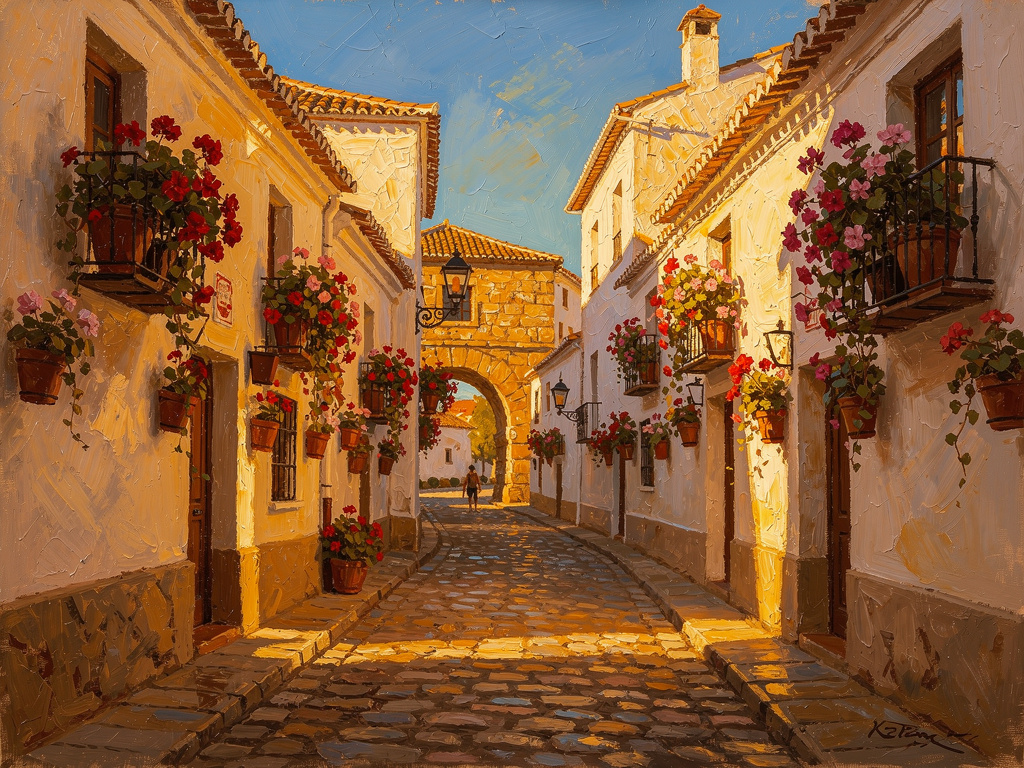
I said that Tavira is charming as fuck.
Estepona makes Tavira look like Gary, Indiana.
Part 8: The DNV application. The immigration office. And the question that stopped being a question.